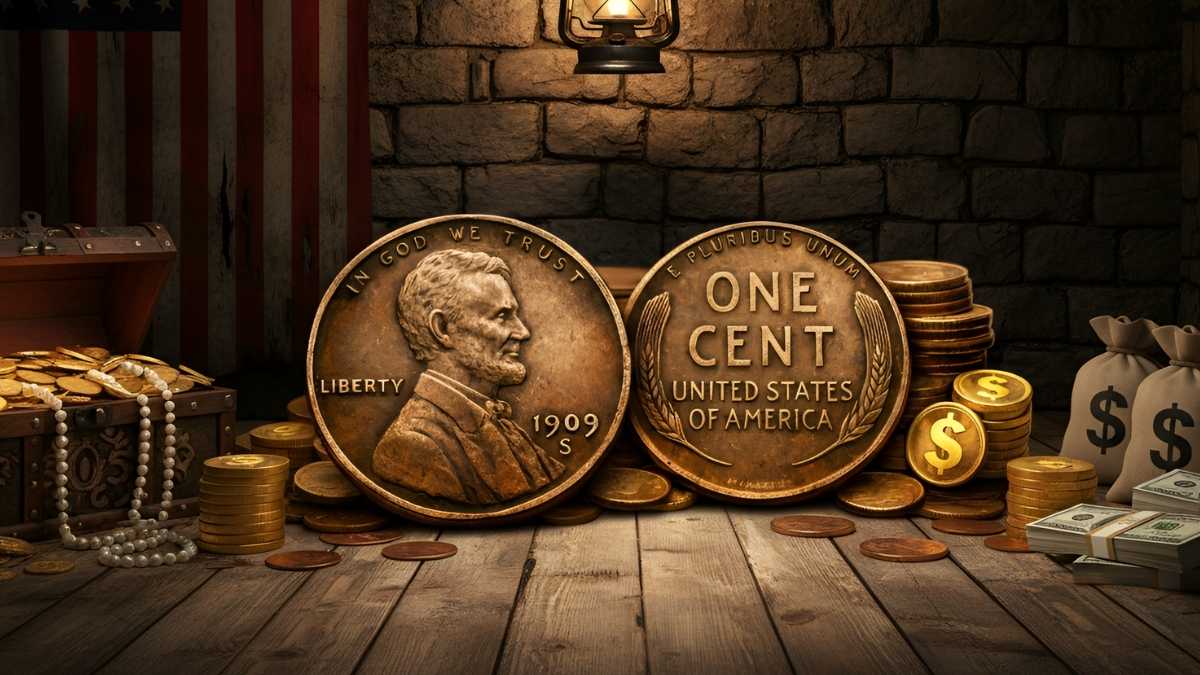
Rare Lincoln Wheat Penny Value 2026: The Lincoln Wheat penny is one of the most iconic coins in American numismatics. Minted from 1909 to 1958, these coins were once common in circulation, yet certain rare varieties have become treasures worth millions. In fact, some Wheat pennies have sold for as much as $4.4 million, making them legendary among collectors. This guide explores the history, rarity, and collector strategies for identifying valuable Wheat pennies in 2026.
Historical Background
The Lincoln Wheat penny was introduced in 1909 to honor the centennial of Abraham Lincoln’s birth. Designed by Victor David Brenner, the coin features Lincoln’s portrait on the obverse and two wheat stalks framing the words “ONE CENT” on the reverse. For nearly fifty years, these pennies circulated widely, becoming a familiar part of American life. Today, they are prized for their historical significance and collectible value.

Key Dates and Rarities
Not all Wheat pennies are valuable, but certain dates and mint marks stand out:
- 1909-S VDB Penny: Famous for its limited mintage and designer initials, this coin is a cornerstone of Wheat penny collections.
- 1914-D Penny: Scarce in high grades, making it one of the most sought-after Wheat pennies.
- 1922 No D Penny: A Denver Mint issue struck without a mint mark, highly prized by collectors.
- 1931-S Penny: Low mintage and strong demand make this coin valuable even in circulated condition.
- 1943 Copper Penny: A legendary error coin struck in copper instead of steel during World War II, worth tens of thousands and sometimes millions.
- 1955 Double Die Penny: Famous for its dramatic doubling on the obverse, with values ranging into the thousands.
High-grade examples of these coins, especially the 1943 copper penny, have sold for millions, with some reaching $4.4 million at auction.

Why Some Wheat Pennies Are Worth Millions
Several factors contribute to the extraordinary value of certain Wheat pennies:
- Low Mintage: Coins produced in small numbers are naturally rarer.
- Mint Errors: Mistakes such as doubled dies or missing mint marks create unique varieties.
- Condition: High-grade coins with minimal wear are significantly more valuable.
- Collector Demand: Popular varieties attract strong interest, driving prices upward.
How to Spot Hidden Value
Collectors and casual finders should pay close attention to:
- Mint Marks: Located below the date, mint marks such as “S” for San Francisco or “D” for Denver can increase value.
- Date: Certain years are known for rarities, such as 1909, 1914, 1922, 1931, 1943, and 1955.
- Errors: Doubling, missing marks, or unusual features can signal a valuable coin.
- Condition: Coins with sharp details and original luster are worth far more than worn examples.
Market Trends in 2026
The market for Wheat pennies remains strong in 2026. Auction houses regularly feature rare examples, with prices continuing to rise. Collectors are especially eager to acquire high-grade coins certified by professional grading services. The combination of nostalgia, rarity, and investment potential ensures that Wheat pennies remain a cornerstone of American coin collecting.
Collector Tips
For those interested in finding or collecting Wheat pennies:
- Check Your Change: Rare pennies occasionally appear in circulation or old coin jars.
- Use Magnification: A jeweler’s loupe can help spot doubling or other errors.
- Buy Certified Coins: Professional grading ensures authenticity and condition.
- Preserve Carefully: Store coins in protective holders to prevent damage.
Conclusion
The Lincoln Wheat penny is more than just a piece of small change. Certain rare varieties can be worth $4.4 million or more, turning an ordinary coin into a hidden fortune. From the 1909-S VDB to the 1943 copper penny, these treasures remind us that extraordinary value can be found in the most unexpected places. For collectors and casual finders alike, the thrill of discovering a rare Wheat penny is both a financial reward and a connection to America’s past.