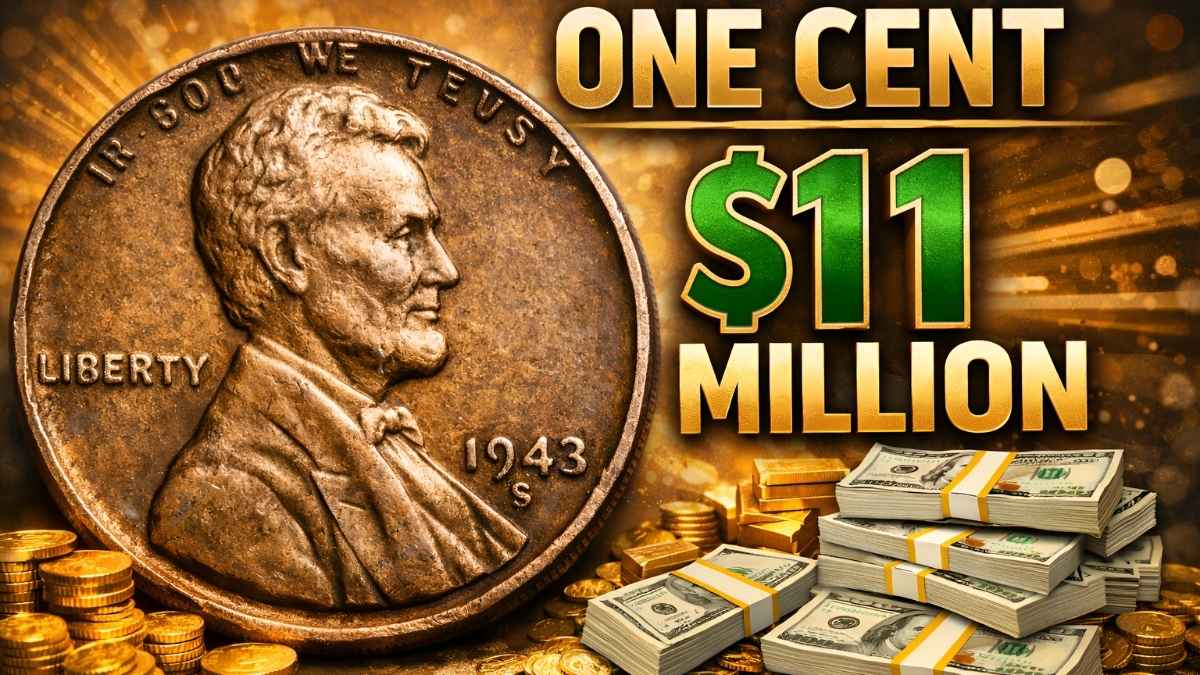
One Cent $11 Million: The Lincoln Wheat penny was first introduced in 1909 to honor the centennial of Abraham Lincoln’s birth. Designed by Victor David Brenner, it featured Lincoln’s portrait on the obverse and two wheat stalks on the reverse. This design remained in use until 1958, making it one of the longest-running coin designs in American history. While most Wheat pennies are common and worth only a few cents, certain rare varieties have become legendary, with values reaching into the millions.
Why Some Wheat Pennies Are Worth Millions
The extraordinary value of certain Wheat pennies comes down to rarity, condition, and historical significance. Coins with extremely low mintages, dramatic minting errors, or unique varieties are highly prized. When these coins survive in pristine condition, they can command astronomical prices at auction. The idea that a humble one-cent coin could be worth $11 million captures the imagination of collectors and casual hobbyists alike.
Famous Rare Wheat Pennies
Several Wheat pennies stand out as key rarities that can reach extraordinary values:
- 1909-S VDB Penny: The first-year issue from San Francisco with designer Victor David Brenner’s initials. With fewer than half a million minted, it is one of the most famous key dates.
- 1914-D Penny: Scarce in high grades, this Denver issue is a cornerstone of advanced collections.
- 1922 No D Penny: A variety struck in Denver without a visible mintmark, making it a unique rarity.
- 1931-S Penny: With a low mintage of under one million, it is highly collectible.
- 1943 Copper Penny: Mistakenly struck on copper planchets during World War II, these coins are among the most valuable in American numismatics.
- 1944 Steel Penny: Another wartime error, created when leftover steel planchets were used instead of copper.
The 1943 Copper Penny: A Legendary Treasure
The 1943 copper Wheat penny is often cited as one of the most valuable coins in existence. During the war, pennies were supposed to be struck in steel to conserve copper. A few copper planchets were mistakenly used, creating one of the rarest coins in American history. Auction records show these coins selling for hundreds of thousands, and in some cases, millions. The possibility of finding one in circulation continues to inspire collectors.
Condition and Grading
The value of a Wheat penny depends heavily on its condition. Coins are graded on a scale from Poor (P-1) to Mint State (MS-70). High-grade examples of rare varieties can be worth exponentially more than circulated ones. Professional grading services provide authentication and certification, which adds credibility and increases market value.
Market Trends in 2026
In 2026, the market for rare Wheat pennies remains strong. Collectors continue to chase key dates and minting errors, driving prices higher. Auction houses report record-breaking sales, with pristine examples of rare varieties attracting intense bidding wars. The nostalgia associated with Lincoln’s image and the historical significance of these coins ensures their enduring popularity.
Identifying Valuable Wheat Pennies
Collectors look for several key indicators when identifying valuable Wheat pennies:
- Mintmark location: Coins from San Francisco and Denver often have lower mintages.
- Error details: Doubling, missing mintmarks, or wrong planchet strikes increase value.
- Condition: Coins with sharp details and original luster are worth far more.
- Historical context: Wartime issues and first-year designs are especially prized.
The Thrill of Discovery
The idea that a penny could be worth $11 million adds excitement to the hobby. While the odds of finding such a coin in circulation are slim, stories of rare coins turning up unexpectedly continue to inspire hope. Every coin jar, inherited collection, or pocketful of change holds the possibility of hidden treasure.

Conclusion
The Lincoln Wheat penny is more than just a piece of currency. It is a symbol of American history, a product of craftsmanship, and in rare cases, a multimillion-dollar treasure. In 2026, collectors remain captivated by the pursuit of these coins, proving that even the smallest denomination can carry extraordinary value. The dream of uncovering a one-cent coin worth $11 million keeps the passion for numismatics alive for generations to come.